

Low Back Pain
It is estimated that about 80% of Americans will suffer from low back pain during their lives. It can be mild like soreness after shoveling snow, or it can be so severe that you end up on disability.
Low back pain is not something I want anyone to “just live with.” But in my experience, it is very important to address low back pain before it becomes a chronic or severe problem. The more time a problem has to develop, the longer and more difficult it can be to treat. And I’d like to help you find an effective treatment before it becomes a big problem!
What Is Low Back Pain?
Low back pain is a very broad term that describes pain that occurs in your lower back. To get a little technical, we are usually discussing the lumbar spine and sacrum. This pain can involve the muscles, nerves, joints, ligaments, or discs of the low back – or a combination of these structures.
Common Kinds of Low Back Pain
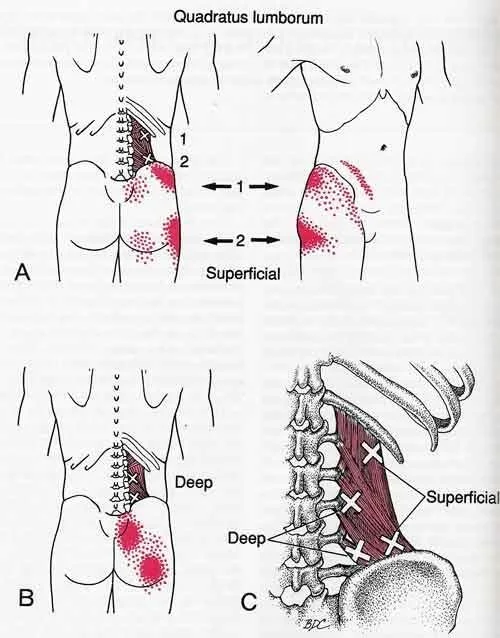
In my experience, the most common kind of low back pain is pain from tight low back muscles and their resulting trigger points. There are many reasons why low back muscles can become tight, such as gardening, sports, shoveling, or lifting heavy things. Some of these things can be modified (such as taking more frequent breaks from bending over while gardening) or avoided entirely (hire snow removal and moving companies).
However, many people have trigger points, also known as knots. In my clinical experience, trigger points contribute to a large percentage of low back pain. When muscles contract, they give off lactic acid as a byproduct – which is what makes you sore when you work out (and why it’s important to drink water to flush it out afterward). However, because the muscles are tight, they prevent the lactic acid from moving out, so it concentrates into a point – a trigger point.
You know you’ve found a trigger point because when you press on it, it usually “hurts so good!” Manually moving trigger points out is what therapeutic massage aims to do. You can also work on them at home with massage guns or a “theracane.”
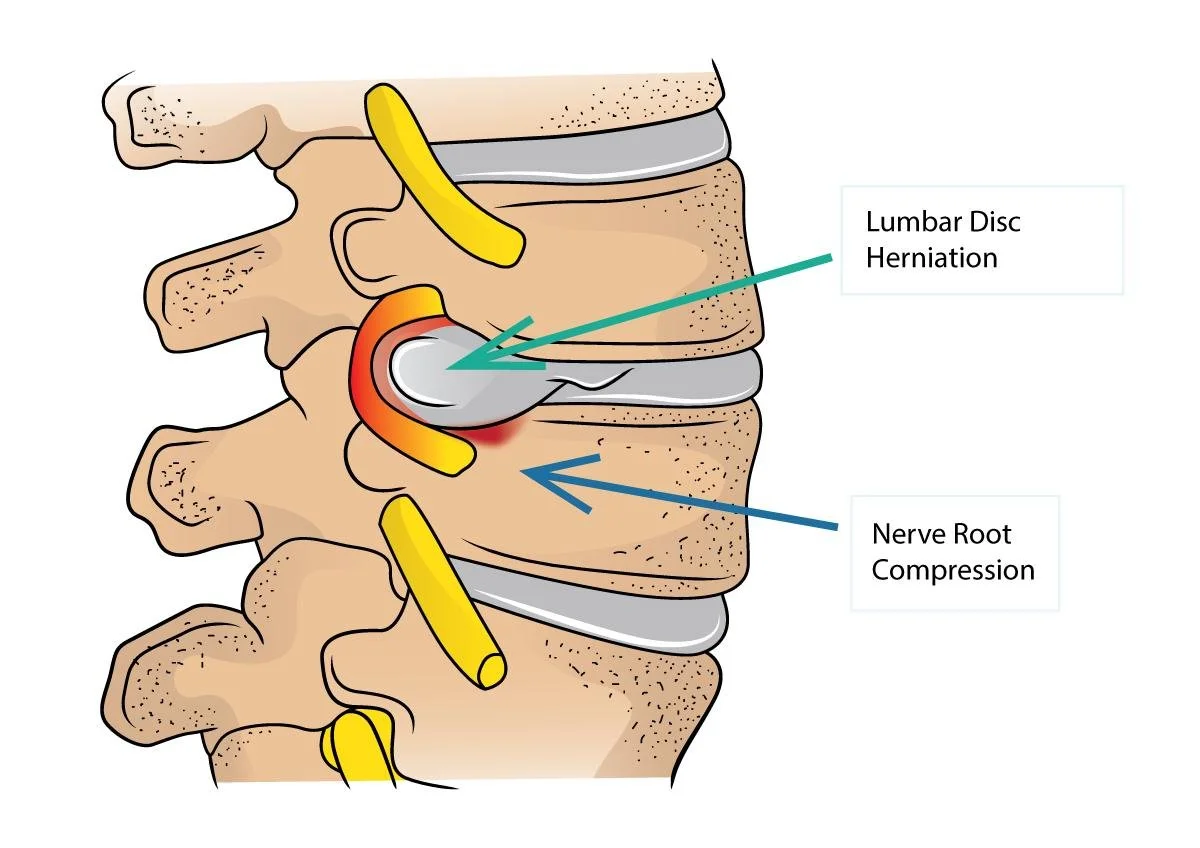
Disc problems are another common kind of low back pain. You can suffer from anything from a small bulge to a full disc herniation. Disc bulges are usually seen at the beginning of the path of low back pain, and if unaddressed, can turn into disc herniations. Or you can jump to a disc herniation directly via an accident. Disc herniations can present as just low back pain, or they can include radiating nerve pain into the buttocks, into the leg, or all the way down to the foot and toes. If you cough, sneeze, or bear down (like if you strain to pass your bowels) and it flares your low back pain or any radiating pain, you could have a disc herniation.
Most lumbar disc herniations can be addressed with conservative treatment, such as chiropractic or PT. More severe disc herniations may need surgical intervention. I highly recommend getting a full evaluation to ensure proper care.
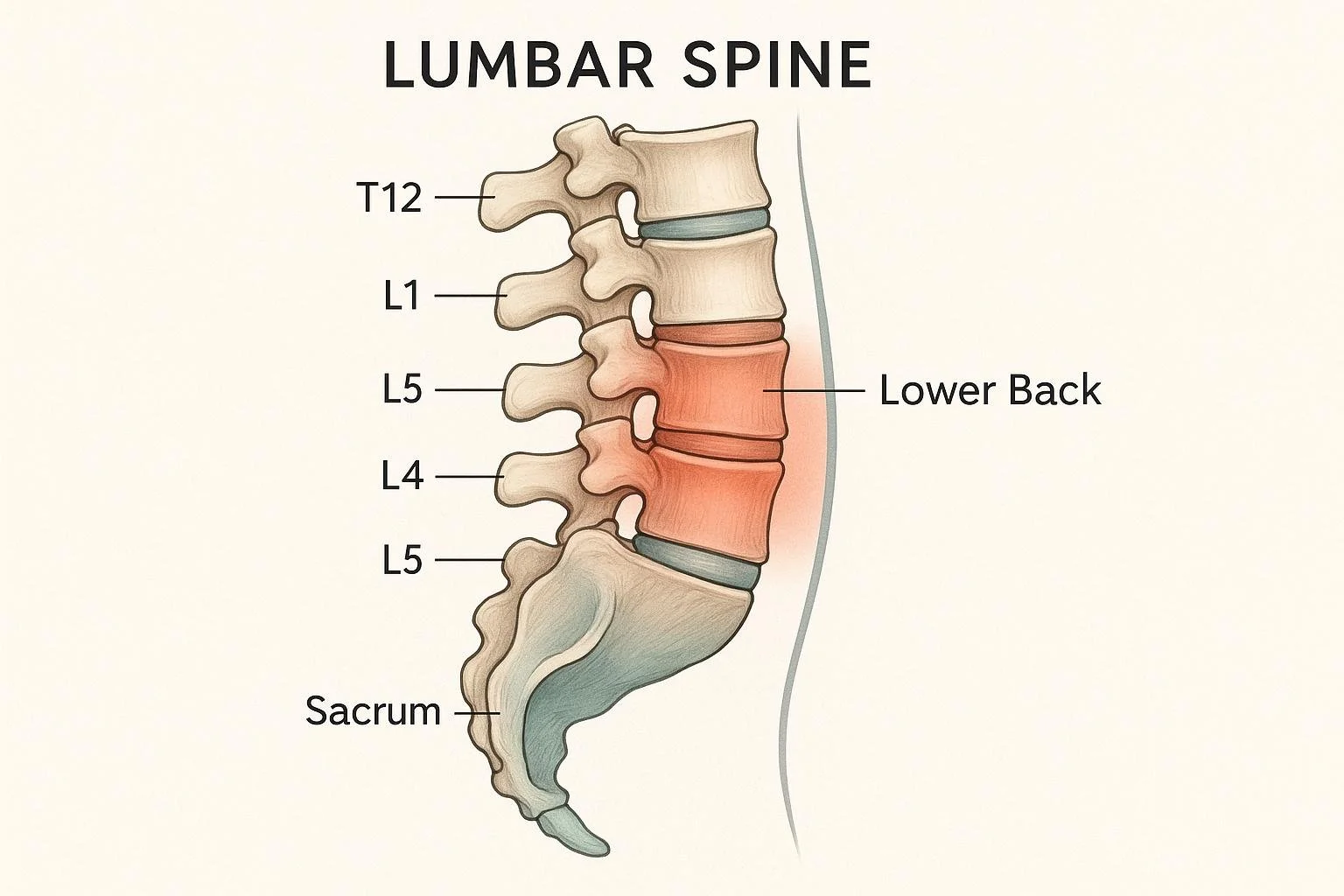
Joint dysfunction and inflammation are another common kind of low back pain. When muscles are tight or your lumbar spine is misaligned, it interferes with your normal body motion, which puts abnormal stress on your joints. This abnormal movement and stress create inflammation of the joints, and that inflammation is what irritates your nerves to cause pain. In the long term, constant abnormal stress causes excessive wear and tear on the joints, also known as arthritis.
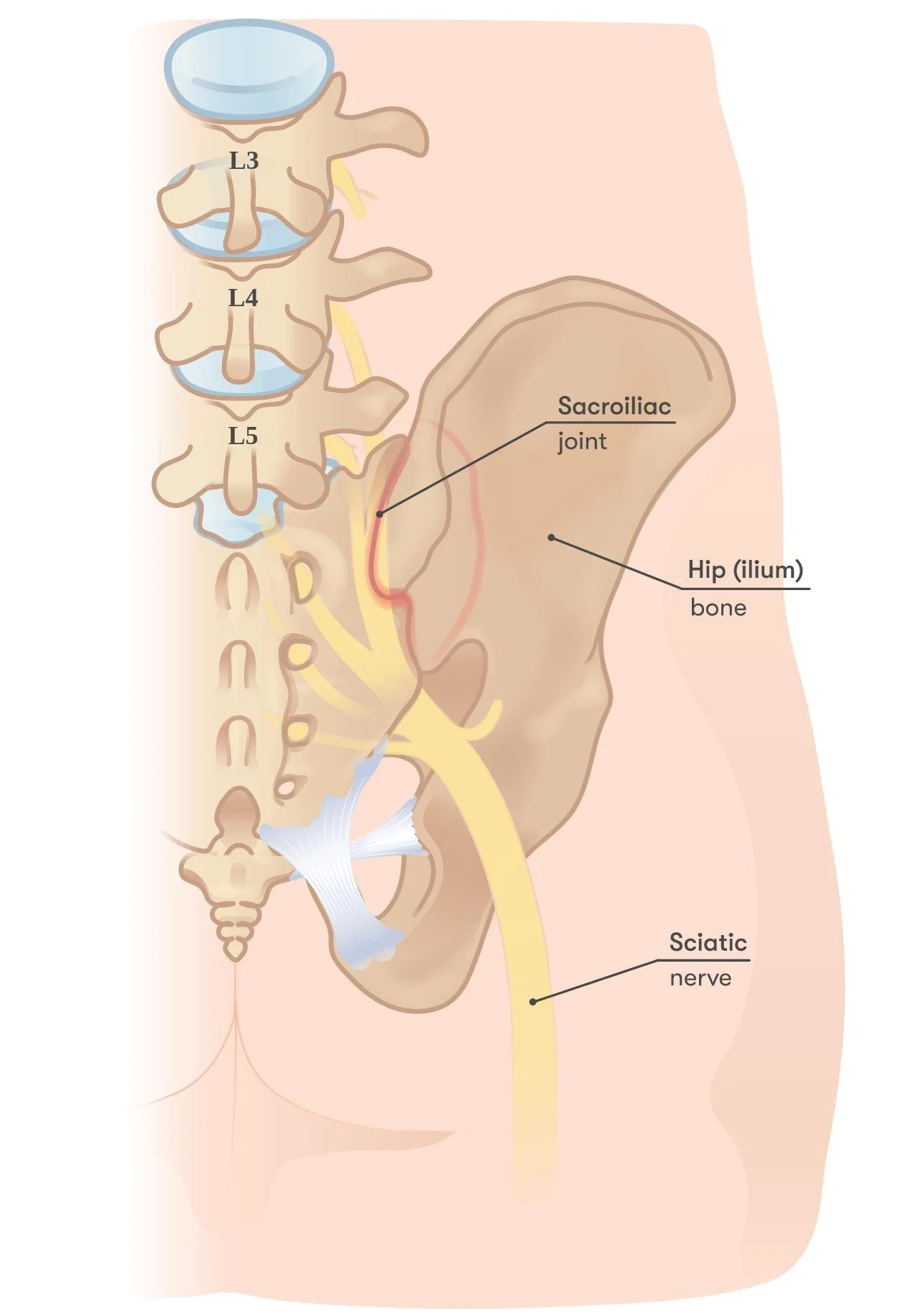
Last but not least is sacroiliac joint, or SI joint, pain. In my opinion, this is one of the worst kinds of low back pain to experience. The SI joints are big, but not very mobile. They also tend to compensate for other dysfunction in your low back. When the SI joints become inflamed, this pain tends to be sharp and stabbing, especially with movement. Going from sitting to standing, standing to sitting, or walking tend to aggravate them the most. (Good news – the chiropractic techniques I use tend to be very effective for sacroiliac joint pain!)
Common Symptoms of Low Back Pain
Pain – dull and achy, sharp, stabbing, shooting, or “shocking”
Tightness of low back muscles
Stiffness
Reduced range of motion
Radiating pain into the buttocks
Radiating pain down the side of the thigh
Radiating pain down back of the leg (the back of the leg is often sciatica)
Common Causes of Low Back Pain
Accidents or injuries such as car accidents
Overtraining and/or not enough recovery time between workouts
Sports
“Sleeping funny”
Overstretching
Poor posture
Long periods of time siting
Driving long distances
Sitting on a bad couch or chair
Sleeping in an uncomfortable or unsupportive bed (such as an air mattress)
Overdoing it like shoveling a driveway of heavy snow
Repetitive overuse injuries
If you have ever had the experience of “throwing out” your back, you know that even a small, seemingly insignificant motion can wreak havoc. It is very common for someone to bend forward to pick up a small object and suddenly end up in muscle spasms and pain. If your low back has ever gone out for “no reason,” that usually tells me that you have some postural instability that needs to be addressed – either through chiropractic, targeted therapeutic exercise, or both.
Tips to Prevent Low Back Pain
Take frequent breaks from sitting or driving
Move your body regularly
Do exercises to “strengthen your core”
Stretch
Avoid bad couches, chairs, and beds
Address sports injuries – don’t ignore them
Consider preventative chiropractic treatment
When Should You See a Doctor Immediately?
While most low back pain is not a medical emergency, certain symptoms require immediate evaluation.
Major trauma
Fever
Severe numbness
Difficulty walking
Sudden severe symptoms
Muscle weakness
Loss of bowel and/or bladder control
Sexual dysfunction
Deep, “boring” low back pain – like a drill is boring through you
Night sweats
Fever tends to indicate an infection, which could be meningitis if paired with sudden, severe low back pain (or neck pain or headaches).
Cauda Equina Syndrome is a condition where the nerve bundle at the base of your low back (known as the “cauda equina,” because equine = horse, and the bundle looks like a horse tail) become pinched in a very serious way. Cauda Equina Syndrome is usually caused by an accident, and it creates such a misalignment in the lumbar spine and/or disc herniation that you have significant impingement (the technical word for pinching) of the cauda equina, which results in low back pain accompanied by one or more of the following:
Loss of bowel control – either you cannot poop at all, or you can’t stop
Loss of bladder control – either you can’t pee, or you can’t stop peeing
Sexual dysfunction
Foot drop – when you lift your leg, your foot will drop down which results in dragging of the foot while walking
You must go get evaluated immediately at the ER just in case it is a surgical emergency as these symptoms can become permanent if the neurological damage is allowed to progress.
Deep, boring bone pain paired with night sweats can be an insidious sign of bone cancer, so please get checked out ASAP.
How Chiropractic May Help Low Back Pain
The most common kinds of low back pain can often be very effectively addressed with chiropractic care. My Pulley Method works by helping to restore proper postural alignment, which takes the abnormal pressure off the joints, nerves, and discs, which in turn helps the muscles loosen.
The simple fact is that we did not evolve to sit all day in front of a computer or in the driver’s seat. We are not meant to basically be hunched over all the time. When you sit too much, your hip flexors (the muscles on the front of your hip) and low back muscles tighten up, while your abs and glutes start to weaken – causing that dreaded “weak core.”
Sitting too much means that your joints are in unnatural positions for a long time, which puts abnormal pressure on the joints. This in turn leads to inflammation and pain, as well as degeneration like arthritis in the future.
Between the tight muscles and stressed joints, the discs get “smooshed” and the nerves become impinged and now here we are.
It’s the “which came first – the chicken or the egg” conundrum – muscles, joints, disc, or nerves? The bright side is it usually doesn’t matter – once we start restoring proper postural alignment, the rest will follow.
If you would benefit from other modalities to enhance your recovery, we will discuss them at your visit.
How Acupuncture May Help Low Back Pain
In Traditional Chinese Medicine (TCM), pain is due to qi (your body’s energy) and blood becoming stagnant or stuck. When you experience low back pain, it is because your qi and blood is getting blocked from proper flow in the area. So, our goal with acupuncture is to promote the proper flow of qi and blood.
During a typical acupuncture treatment for low back pain, I insert needles into your hands and feet to stimulate acupuncture points that help promote qi and blood flow, as well as points that are particular for low back pain. I can also add acupuncture points for any radiating pain that may be affecting you.
I will also try to help loosen tight muscles in your back by needling them directly. It is not always comfortable inserting the needle, but once it goes into the muscle, it helps to disrupt the muscle spasm so the muscle can relax.
If your low back muscles are too tight or you are too uncomfortable that day, I can also do cupping to relive the tight muscles. The cups work by creating a gentle suction that pulls on the muscles to loosen them.
In any case, I tailor my acupuncture treatments to what you need to get you the best results possible to get you out of pain.
What To Expect During Your Visit
During your visit, we will discuss your low back pain and other health history to determine what kind of low back pain you are experiencing. I will then perform an examination to narrow down where it is located and if there is any nerve involvement.
If I determine that you need an x-ray or MRI, I will refer you out for imaging before treatment. (If you already have imaging, please send it to me in advance so I can review it.)
Once I have determined where your low back pain is and what is causing it, we will discuss treatment options and get you started.
Dr. Janine’s Clinical Perspective on Low Back Pain
Low back pain can be very complicated because you may be experiencing more than 1 type of low back pain at a time. But treatment can be very simple – we just need to get to the root of the problem so we can properly address it.
If you have already tried:
Medications like OTC pain relievers or muscle relaxers
PT
Massage
Cortisone injections
But none of those treatments gave you relief, or that relief did not last – then there’s a better than even chance that chiropractic and/or acupuncture is the next best step for you.
Mini FAQ
Q: Do I need an x-ray or MRI before I get adjusted?
A: Not necessarily. If I believe you need an image, I will refer you out for one before we proceed with treatment. If you already had imaging, please send it to me before your first appointment so I can review it.
Q: Is my low back safe to treat with chiropractic even if I have a disc herniation?
A: Usually yes, but I will determine that after your evaluation. If you have an older disc herniation that is healed and your doctor cleared you to return to work and normal activities, then chiropractic is usually a safe treatment.
If you have an active, acute disc herniation that is not severe enough to require surgery, typically chiropractic is very helpful to alleviate your pain and help promote faster healing. (Research suggests that chiropractic care and physical therapy can improve pain and function for many people with disc herniations and may help support recovery compared with no treatment.)
If you are worried about trying chiropractic, we can always start with acupuncture!
Q: Is acupuncture an effective treatment for low back pain?
A: According to findings of the WHO, yes. Acupuncture helps to reduce inflammation, improve circulation, and promote nerve healing, so it is great as a treatment on its own for low back pain, or in conjunction with other modalities such as chiropractic or PT.
Q: Can I still exercise with low back pain?
A: Yes, and oftentimes it can help manage the pain and promote healing because you are keeping your own qi and blood flowing. My recommendation is to do about 80% of what you think you can safely do, and if you have any increase in pain, stop immediately.
Q: Should I rest or keep moving?
A: That truly depends. The rule of thumb is that if movement helps, keep moving; but if rest helps, then rest. Tight muscles and arthritis tend to benefit from movement, while disc herniations and acute injuries benefit more from rest.
Related Conditions & Resources
For Low Back Pain:
Disc herniations
Hip pain
Knee pain
What I Want My Patients to Know About Low Back Pain
I’ve been where you are. I know what you’re going through. And there is a pathway forward. (Read more here about my journey to becoming a chiropractor.)
Low back pain can range from a minor inconvenience to a major hassle in your life. But the chances are high that your low back pain can be helped; if not entirely, at least we can make it more manageable.
Not sure whether chiropractic or acupuncture is the right fit for your low back pain? That's okay. One of the goals of your first visit is to determine what's causing your symptoms and whether chiropractic care is likely to help. If it isn't, I'll tell you - and if needed, I'll help point you toward the next appropriate step.